Product
January 7, 2026

December Product Update 2025

In December, we sharpened your control over sensitive data across SaaS tools - adding integration-level filtering to dashboards, exposure views across your asset inventory, direct Zendesk file deletion, and semantic classifiers that understand context, not just datapoints.
Download
Download
Product
January 7, 2026

December Product Update 2025

In December, we sharpened your control over sensitive data across SaaS tools - adding integration-level filtering to dashboards, exposure views across your asset inventory, direct Zendesk file deletion, and semantic classifiers that understand context, not just datapoints.

Download
Download

This month’s updates give you even more control over how you investigate and reduce sensitive data exposure across your SaaS stack. We focused on clearer visibility, stronger data understanding, and more direct remediation.

Dashboard Improvements: Integration-Level Visibility

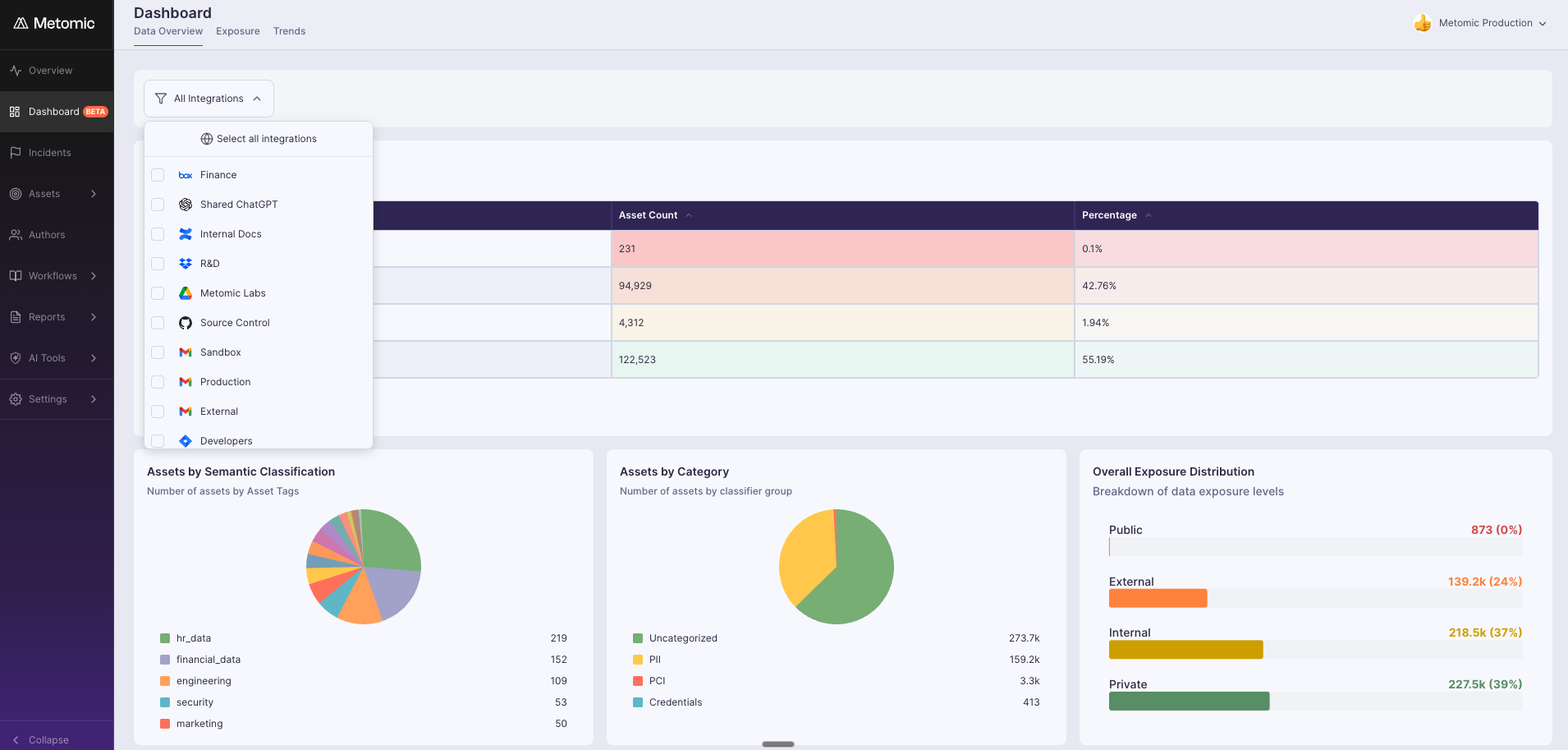
Dashboards are designed to give you a high-level view of your data security posture. You can now filter dashboards by individual integrations such as Slack, Google Drive, Zendesk, or Confluence.

This makes it even easier to:

  • Monitor exposure and risk trends per tool
  • Spot where issues are emerging
  • Decide which integrations need deeper investigation

Dashboards are now a more effective starting point for investigations, helping you prioritise quickly without losing sight of the bigger picture.
Asset Inventory Updates: Exposure Filtering Across All Data

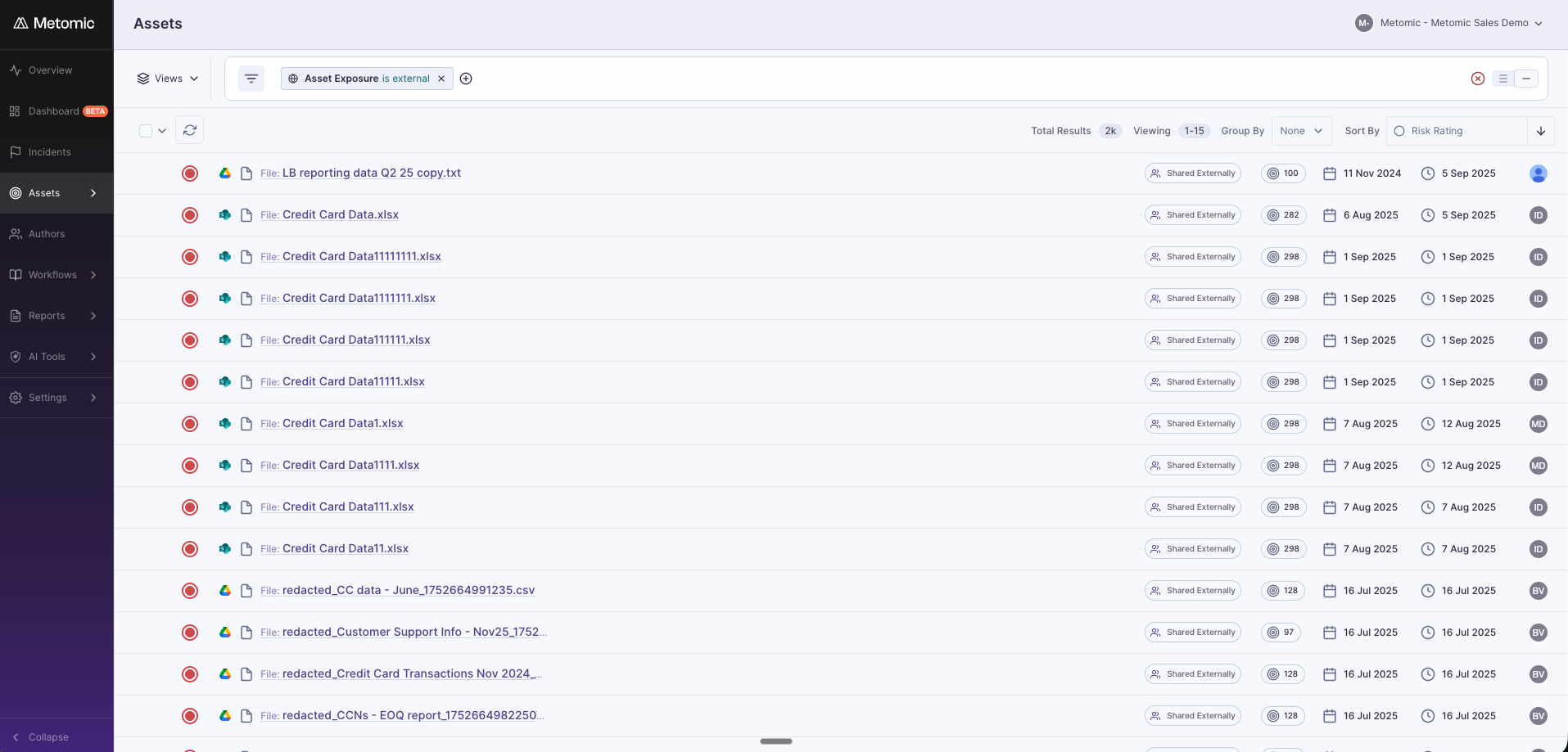
The Assets page is the central hub for your data inventory in Metomic. It brings together all historical assets across your SaaS environment. We have added a new exposure filter to make it easier to understand and act on risk.

You can now filter assets by their sharing status, including public, internal, external, or private.

This allows you to:

  • Quickly identify high-risk assets based on exposure
  • Apply a consistent exposure view across all historical data
  • Move from discovery to remediation without jumping between views

This is especially useful during incident response, audits, or ongoing efforts to reduce unnecessary exposure.
Zendesk Remediation: Delete Files Directly from Metomic

You can now delete files in Zendesk directly from Metomic.

This gives you a clear remediation option when sensitive data is uploaded in error, shared too broadly, or stored in Zendesk when it should not be there.

Instead of switching tools or relying on manual follow-ups, you can identify and remove risky files at the source. This helps reduce exposure faster and keeps remediation actions auditable.

Smarter Data Discovery with Semantic Classifiers

We have made significant improvements to semantic classification. Metomic can now classify documents based on context and meaning, not just specific datapoints.

This enables document-level classification such as:

  • HR and people data
  • Financial information
  • Intellectual property
  • Other business-critical content

You can now understand not only where sensitive data lives, but also what type of data it is. This gives you a stronger foundation for more accurate policies, prioritisation, and remediation.

Metomic API: Build Custom Workflows and Integrations

The Metomic API is now available for teams that want deeper integration and automation.

Using the API, you can:

  • Trigger and manage scans programmatically
  • Integrate incidents into existing workflows
  • Export data for reporting, audits, and compliance evidence
  • Build custom remediation and alerting logic

This gives you more flexibility to connect Metomic with the rest of your security and compliance tooling.

Confluence Integration Improvements

We have upgraded the Confluence integration to a new authentication framework. This makes the setup process simpler and more reliable.

For customers connecting Confluence, this reduces friction and helps you get visibility sooner.

What’s Next

We are continuing to invest in improving classification accuracy and depth. The goal is to help you identify, understand, and reduce sensitive data exposure with greater precision, while keeping day-to-day work moving.

This month’s updates give you even more control over how you investigate and reduce sensitive data exposure across your SaaS stack. We focused on clearer visibility, stronger data understanding, and more direct remediation.

Dashboard Improvements: Integration-Level Visibility

Dashboards are designed to give you a high-level view of your data security posture. You can now filter dashboards by individual integrations such as Slack, Google Drive, Zendesk, or Confluence.

This makes it even easier to:

  • Monitor exposure and risk trends per tool
  • Spot where issues are emerging
  • Decide which integrations need deeper investigation

Dashboards are now a more effective starting point for investigations, helping you prioritise quickly without losing sight of the bigger picture.

Asset Inventory Updates: Exposure Filtering Across All Data

The Assets page is the central hub for your data inventory in Metomic. It brings together all historical assets across your SaaS environment. We have added a new exposure filter to make it easier to understand and act on risk.

You can now filter assets by their sharing status, including public, internal, external, or private.

This allows you to:

  • Quickly identify high-risk assets based on exposure
  • Apply a consistent exposure view across all historical data
  • Move from discovery to remediation without jumping between views

This is especially useful during incident response, audits, or ongoing efforts to reduce unnecessary exposure.

Zendesk Remediation: Delete Files Directly from Metomic

You can now delete files in Zendesk directly from Metomic.

This gives you a clear remediation option when sensitive data is uploaded in error, shared too broadly, or stored in Zendesk when it should not be there.

Instead of switching tools or relying on manual follow-ups, you can identify and remove risky files at the source. This helps reduce exposure faster and keeps remediation actions auditable.

Smarter Data Discovery with Semantic Classifiers

We have made significant improvements to semantic classification. Metomic can now classify documents based on context and meaning, not just specific datapoints.

This enables document-level classification such as:

  • HR and people data
  • Financial information
  • Intellectual property
  • Other business-critical content

You can now understand not only where sensitive data lives, but also what type of data it is. This gives you a stronger foundation for more accurate policies, prioritisation, and remediation.

Metomic API: Build Custom Workflows and Integrations

The Metomic API is now available for teams that want deeper integration and automation.

Using the API, you can:

  • Trigger and manage scans programmatically
  • Integrate incidents into existing workflows
  • Export data for reporting, audits, and compliance evidence
  • Build custom remediation and alerting logic

This gives you more flexibility to connect Metomic with the rest of your security and compliance tooling.

Confluence Integration Improvements

We have upgraded the Confluence integration to a new authentication framework. This makes the setup process simpler and more reliable.

For customers connecting Confluence, this reduces friction and helps you get visibility sooner.

What’s Next

We are continuing to invest in improving classification accuracy and depth. The goal is to help you identify, understand, and reduce sensitive data exposure with greater precision, while keeping day-to-day work moving.

This month’s updates give you even more control over how you investigate and reduce sensitive data exposure across your SaaS stack. We focused on clearer visibility, stronger data understanding, and more direct remediation.

Dashboard Improvements: Integration-Level Visibility

Dashboards are designed to give you a high-level view of your data security posture. You can now filter dashboards by individual integrations such as Slack, Google Drive, Zendesk, or Confluence.

This makes it even easier to:

  • Monitor exposure and risk trends per tool
  • Spot where issues are emerging
  • Decide which integrations need deeper investigation

Dashboards are now a more effective starting point for investigations, helping you prioritise quickly without losing sight of the bigger picture.

Asset Inventory Updates: Exposure Filtering Across All Data

The Assets page is the central hub for your data inventory in Metomic. It brings together all historical assets across your SaaS environment. We have added a new exposure filter to make it easier to understand and act on risk.

You can now filter assets by their sharing status, including public, internal, external, or private.

This allows you to:

  • Quickly identify high-risk assets based on exposure
  • Apply a consistent exposure view across all historical data
  • Move from discovery to remediation without jumping between views

This is especially useful during incident response, audits, or ongoing efforts to reduce unnecessary exposure.

Zendesk Remediation: Delete Files Directly from Metomic

You can now delete files in Zendesk directly from Metomic.

This gives you a clear remediation option when sensitive data is uploaded in error, shared too broadly, or stored in Zendesk when it should not be there.

Instead of switching tools or relying on manual follow-ups, you can identify and remove risky files at the source. This helps reduce exposure faster and keeps remediation actions auditable.

Smarter Data Discovery with Semantic Classifiers

We have made significant improvements to semantic classification. Metomic can now classify documents based on context and meaning, not just specific datapoints.

This enables document-level classification such as:

  • HR and people data
  • Financial information
  • Intellectual property
  • Other business-critical content

You can now understand not only where sensitive data lives, but also what type of data it is. This gives you a stronger foundation for more accurate policies, prioritisation, and remediation.

Metomic API: Build Custom Workflows and Integrations

The Metomic API is now available for teams that want deeper integration and automation.

Using the API, you can:

  • Trigger and manage scans programmatically
  • Integrate incidents into existing workflows
  • Export data for reporting, audits, and compliance evidence
  • Build custom remediation and alerting logic

This gives you more flexibility to connect Metomic with the rest of your security and compliance tooling.

Confluence Integration Improvements

We have upgraded the Confluence integration to a new authentication framework. This makes the setup process simpler and more reliable.

For customers connecting Confluence, this reduces friction and helps you get visibility sooner.

What’s Next

We are continuing to invest in improving classification accuracy and depth. The goal is to help you identify, understand, and reduce sensitive data exposure with greater precision, while keeping day-to-day work moving.