From sensitive data discovery to AI data security
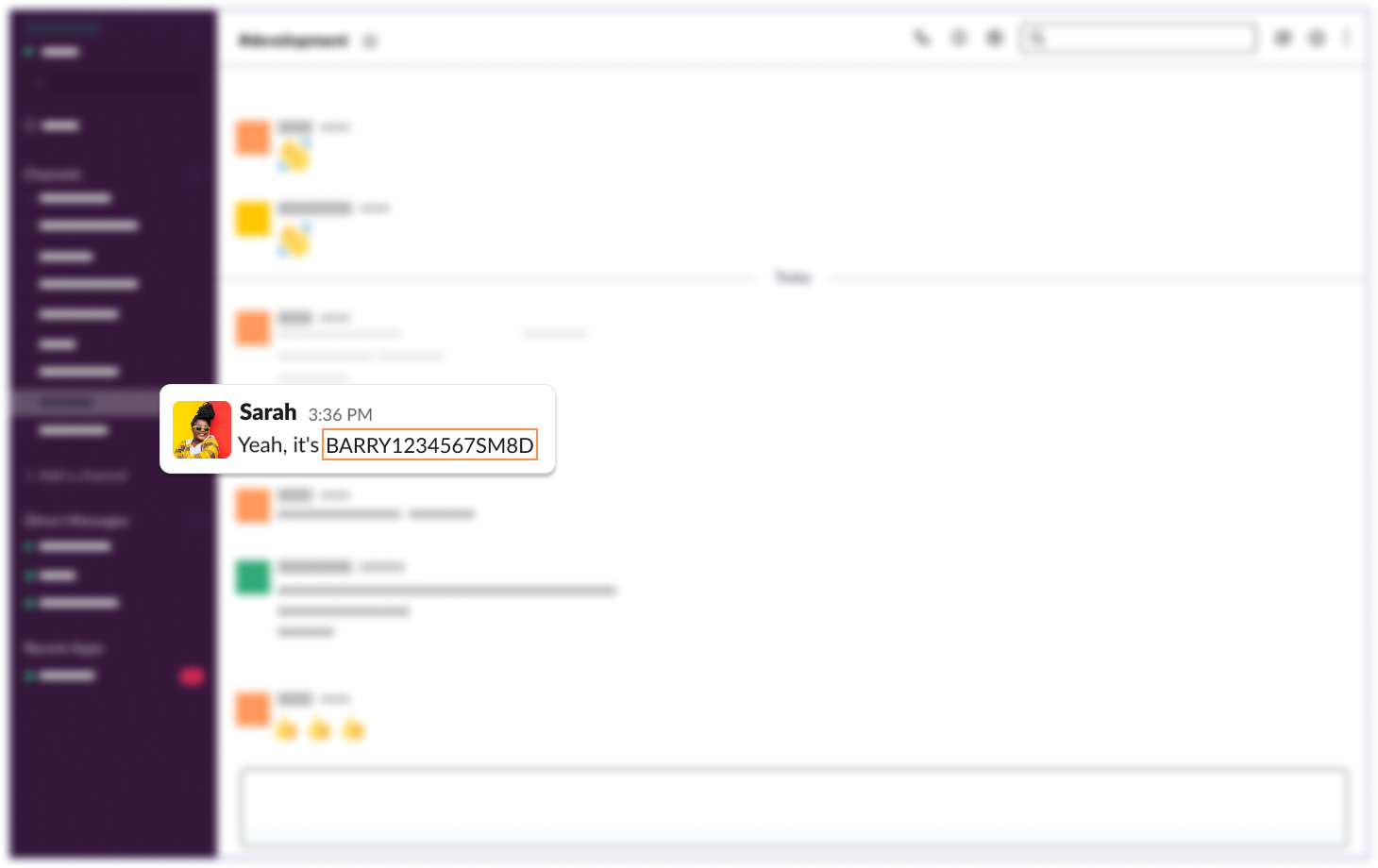
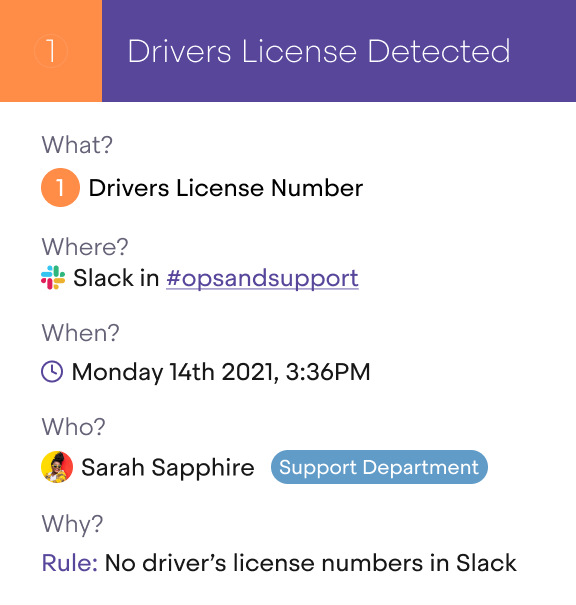
For years, Metomic found the PII, PHI, and PCI in your SaaS apps. Now that same classification engine works where AI does. You see every agent request and the AI tools your people use, and control what reaches your sensitive data.
Trusted by SaaS enabled teams










%20logo.svg)















.png)


One platform for the sensitive data your people and their agents touch
Metomic spent years finding sensitive data at rest in Slack, Google Drive, and your wider SaaS stack. AI data security is where that work goes now: each agent request that passes through Metomic, any AI tool your people open in the browser, and sensitive data moving through both.

Accuracy that holds
Hundreds of classifiers, tuned over years on real SaaS data, now weigh what your agents pull.

Cross-app
One setup covers the agents your team uses and any AI tool they open in the browser.

Real-time
Coach, allow, block, or hold a risky request for approval the moment it happens.

Connect once, control every agent that reaches it
Set up a connector once in Metomic and every AI tool gets the same access, without an API integration per vendor.










.png)
.png)
.png)
.svg)
.png)
.png)

.png)


What our customers are saying about Metomic
Use keyboard
to navigate through testimonials

Metomic provides an excellent, easy-to-navigate interface with the necessary features to help keep our workspace secure.
.png)
We use Metomic to uncover sensitive company data and prevent it from being shared or residing in places it shouldn't. It's a really great supplement where technical controls that could be our frontline of defense don't exist.


Easy integration. It is as simple as a few clicks (and the Metomic onboarding process is excellent, too, as the team guides us through the process).


Metomic addresses risks efficiently—blocking unsafe data sharing or sending alerts to users. This allows our team to remain productive while keeping our data secure. The visibility and control Metomic provides has been game-changing in helping us implement a solid, proactive approach to data security.


The machine learning aspect of AI means that, when paired with security solutions such as identity verification and biometric authentication (voice or fingerprint), it improves in its detection over time, increasing accuracy but also reducing the number of false positives.


I appreciate how configurable and easy it is to setup alerting workflows. The tool is lightweight and easy to integrate into the platforms that our company uses. The customer support team has been excellent at addressing all of our company's concerns.


The big thing for me was how interactive it was in Slack. That was one of our biggest problem points and there was a solution for that immediately.

Immediately, especially for the Google Workspace document sharing, Metomic has paid for itself seven fold.


We were able to find some legacy AWS keys from years ago...that gave us the confidence that in the event of new secrets appearing insecurely across our tech stack, we could rely on Metomic to help us swiftly detect and respond in a click of a button.


Metomic is a SaaS enabler. They help us protect sensitive data in applications like Google Drive, so we can grow our business knowing our data is safe.


Having real-time data-driven insights to share with stakeholders has been invaluable. Metomic ensures that we’re compliant, secure, and proactive, providing the operational resilience necessary to grow in a competitive digital commerce market.
Questions before the rollout.
What is sensitive data?
Sensitive data is information that can cause harm to individuals or organizations if it is exposed.
You have a legal and moral obligation to protect any sensitive information you store or process, particularly if your organization falls under regulations such as GDPR, HIPAA, or PCI DSS.
Examples of sensitive data can include:
- Personally Identifiable Information (PII)
- Protected Health Information (PHI)
- Trade secrets
- Intellectual property
- Payroll and customer financial records
- Legal data
- Biometric data
What is sensitive data discovery?
With teams handling sensitive data every day, it gets hard to keep track of where it goes and who sees it. Sensitive data discovery is the practice of finding that data across the places your work actually happens, then deciding what to do about it.
In SaaS, that meant scanning apps like Slack, Google Drive, and Notion and flagging the files that held it. With AI in the mix, the same question now points somewhere else: which AI tools your people use, what those tools do with your data, and what your agents pull on your behalf.
What do sensitive data discovery and redaction tools do?
Discovery tools inventory the data across the locations you have scanned and tell you what exists, where it sits, and how much of it there is. The good ones add context.
Metomic did that work for years, then took the same classification engine to where AI runs. It weighs the data your agents request and the data your people put into AI tools, tells you which of your AI tools are in real use rather than tried once and dropped, and shows what each tool's own terms say about training on your data.
Then it gives you the lever: coach, allow, block, or hold for a person to approve.
Benefits of data discovery & redaction
Every organization generates data faster than it can track it, and AI has made that worse. Your people paste into chat prompts. Your agents pull records through connectors. Discovery is how that sprawl becomes something you can manage.
You get more than a list. You get the shape of the problem: which data types you hold, where the risk concentrates, which teams and which tools are driving it, and which everyday processes keep creating the worst cases. That is the input to a decision, and it is what turns a written AI policy into something with controls behind it.
For example, your Customer Success team may be pasting KYC documents into a chat prompt because the approved path is slower. You will not fix that by writing another rule. You fix it by seeing the pattern, then putting the control in the path the work already takes.
Why choose Metomic’s sensitive data (PII) discovery tool?
Most tools do one half of this. They classify data sitting at rest, or they watch what an agent is doing. Metomic does both, which is why the classification informs the decision.
You see the AI tools your people use and each request your agents make, with the vendor detail attached: security posture, terms, and what the tool says it does with your data. Then you set the rules that hold.
Rules run where the work happens: coach a person before they paste, redact sensitive fields out of a response before an agent sees them, block a tool you have not approved, or hold a risky request while a person decides.
Each action lands in an audit record and in your SIEM, so when the regulator asks how your AI behaves, you have the answer already written down.
Book a demo
Our team of security experts are on hand to walk you through the platform and show you the impact it can have on your business.
Simply fill in the form and we'll get back to you as soon as we can.


_BestEstimatedROI_Mid-Market_Roi.png)
_HighPerformer_HighPerformer.png)